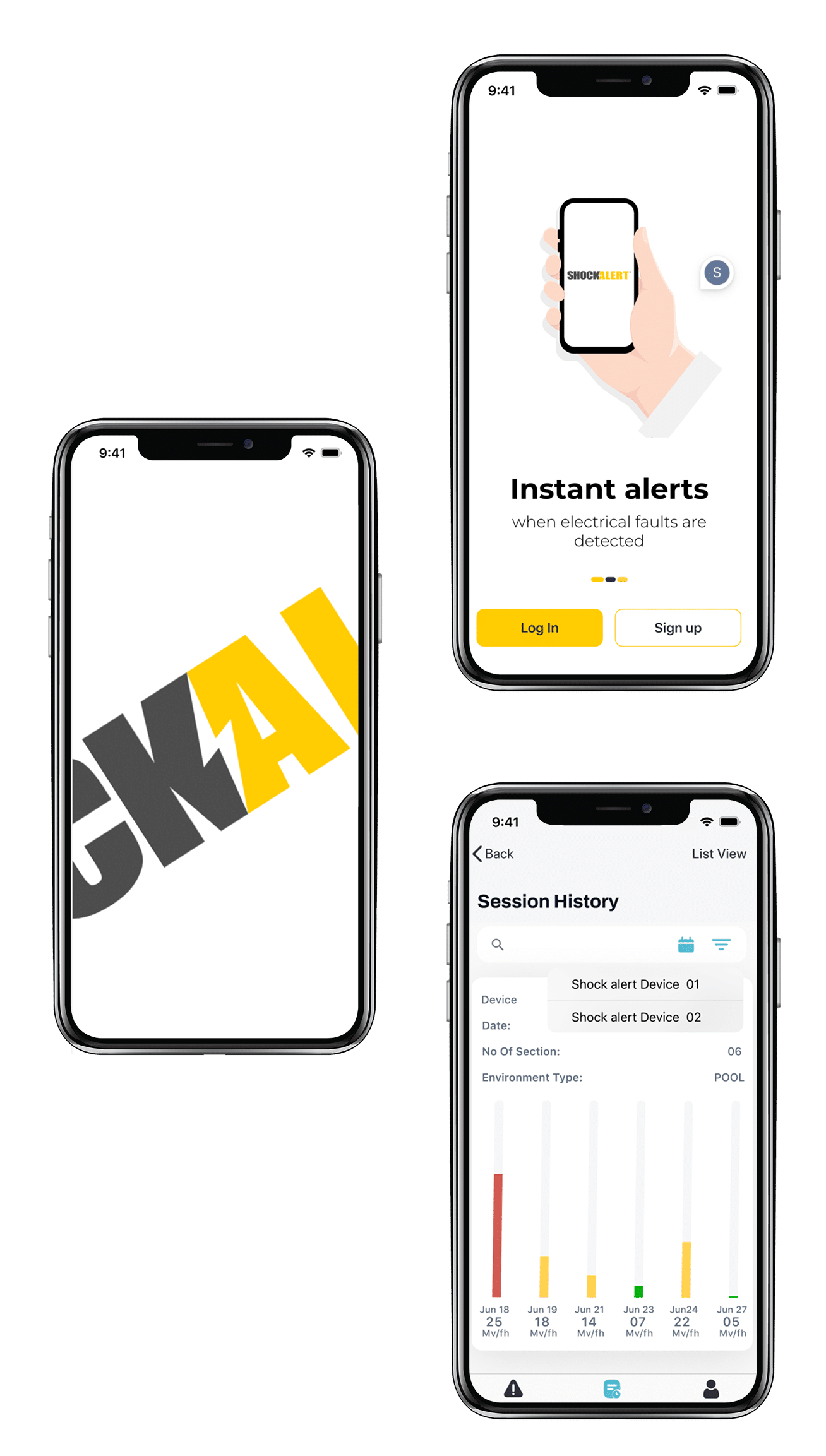
CASE STUDY: Shock Alert Pro
Advancing Life-Saving Technology Through End-to-End Product Development
Learn how we transformed Shock Alert’s electric shock drowning detection device into a more compact, powerful, and production-ready solution.


Innovative electric shock drowning prevention.
Services
Hardware Engineering, Firmware Development, Mobile App Development, Power-On Self-Test Development, Manufacturing Test Optimization
Project Timeline
12 months to market-ready design
Tech Stack
Nordic BLE Module, Custom PCB Design, Cross Platform Mobile App, Rechargeable Battery System
The Challenge: From Proof of Concept to Consumer Ready
Shock Alert came to Systematic Consulting Group with a life-saving mission: protect people from electric shock drowning (ESD), an invisible danger that occurs when AC voltage in water passes through the body, causing paralysis and drowning. Shock Alert’s first-generation device worked, but it needed significant improvements to reach the next level of performance and usability.
The original device was bulky, powered by AA batteries in a water-vulnerable compartment, and required external test fixtures for quality validation during manufacturing. Shock Alert needed a partner who could reimagine the product without compromising the patented core technology that made it effective.
Redesigning for Real-World Use
We started by addressing the device’s most critical limitations. The original design used AA batteries housed in a bottom-mounted compartment that was prone to water intrusion. For a device designed to be submerged, this was a fundamental reliability issue.
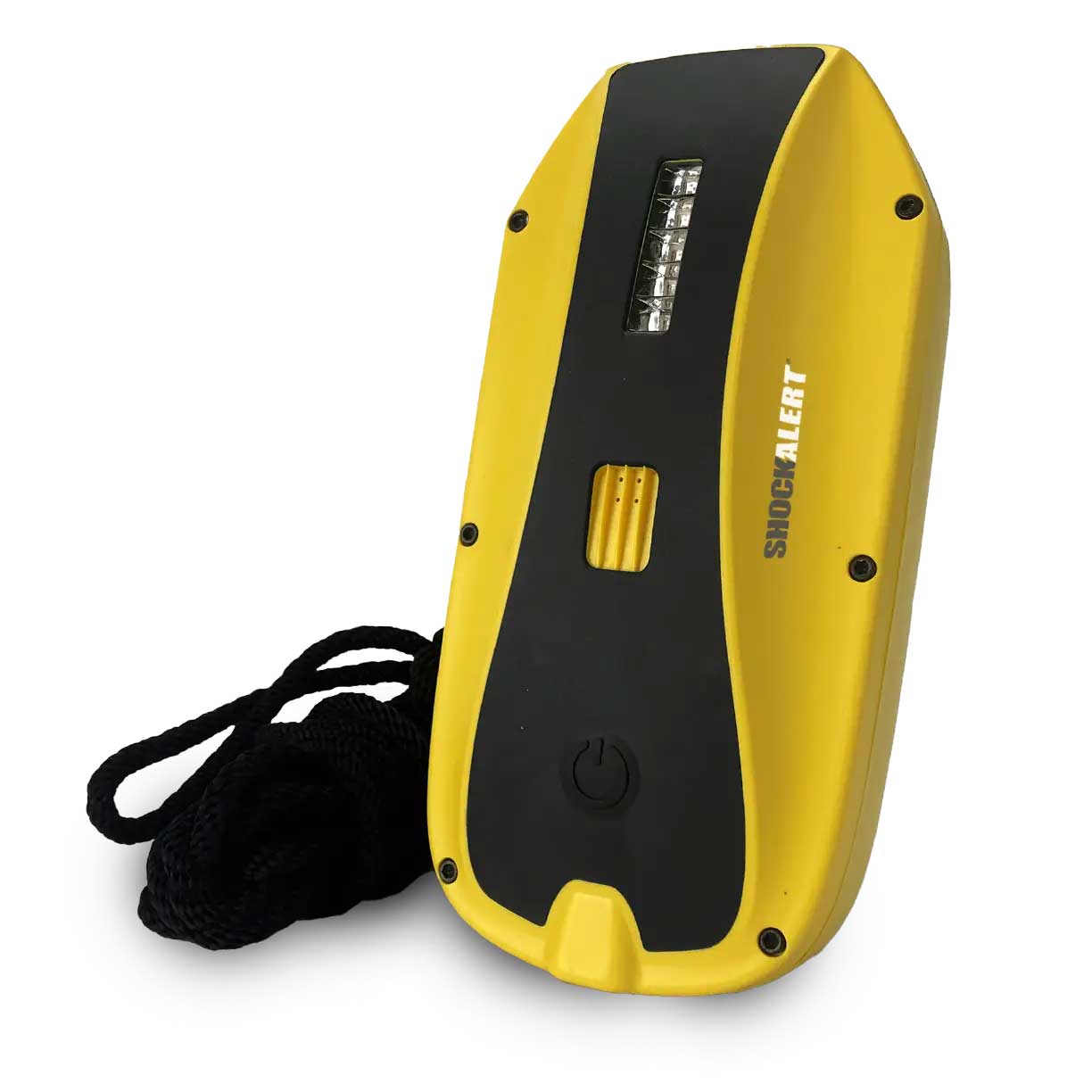
Our solution eliminated the replaceable battery compartment entirely. We integrated a rechargeable battery system into a sealed, compact enclosure that dramatically reduced the device’s form factor while improving water resistance. Because Shock Alert Pro is designed for short-duration testing rather than continuous submersion, we optimized the design around real-world usage patterns.
We also upgraded the display from a basic LED system to a programmable full-color RGB LED array. This allowed us to reconfigure the warning patterns and color indicators, making status feedback more intuitive and easier to interpret at a glance.
Eliminating Production Bottlenecks
One of the most significant innovations we delivered was eliminating the need for external test fixtures during manufacturing. The original device required separate bed-of-nails and assembled test fixtures to validate each unit before shipping.
We developed a comprehensive Power-On Self-Test (POST) system that runs automatically every time the device powers on. This built-in validation checks for cable faults, component failures, and system integrity using the same rigorous standards as the external test fixtures—but without requiring additional manufacturing equipment.
This approach delivered a dual benefit: it reduced manufacturing costs and complexity while actually making the device more reliable in the field. Every time a user powers on Shock Alert Pro, they’re getting factory-level quality validation.
Navigating Part Shortages
Design work began in 2020, right as global supply chains collapsed. With part availability changing daily, we had to make strategic component selections based on what could actually be sourced rather than ideal specifications. We prioritized readily-available components and secured inventory of critical parts like the Nordic BLE modules to ensure production continuity.
The Results
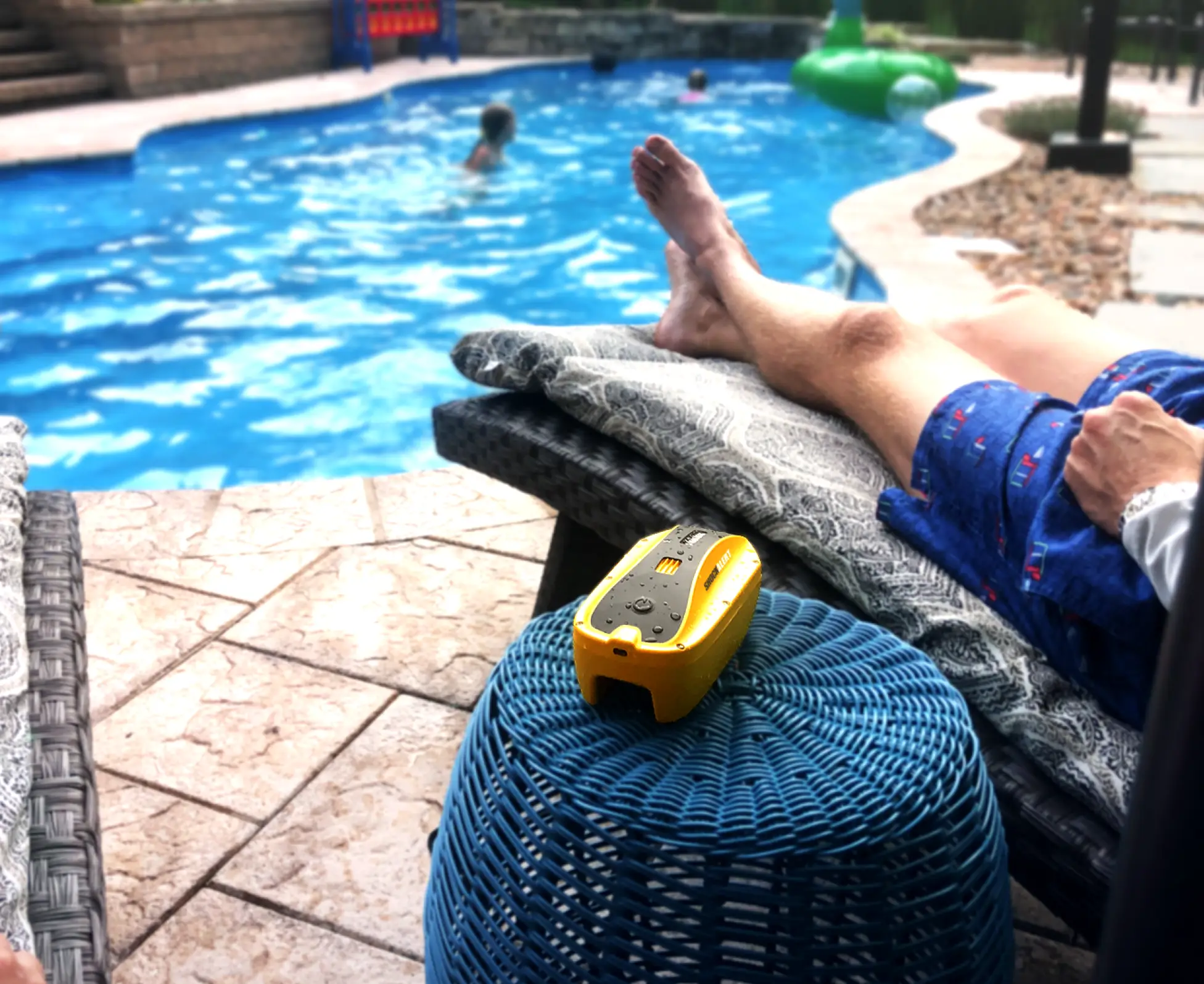
We transformed Shock Alert from a bulky prototype into a production-optimized product that’s easier to manufacture, more reliable in the field, and more intuitive for users. The device is now actively protecting swimmers in pools, docks, marinas, and water features across the country.
Working with Systematic Consulting Group on our Shock Alert Pro was transformational for our product. They took our original device and created a second-generation solution that’s smaller, more reliable, and more cost-effective to manufacture—all while protecting our core patents and technology.”
– Nancy Crigler, Shock Alert
Key Improvements: