
CASE STUDY: Royal Vendors Smart Vending Machine
Reimagining Commercial Vending Through Distributed Intelligence and Connected IoT
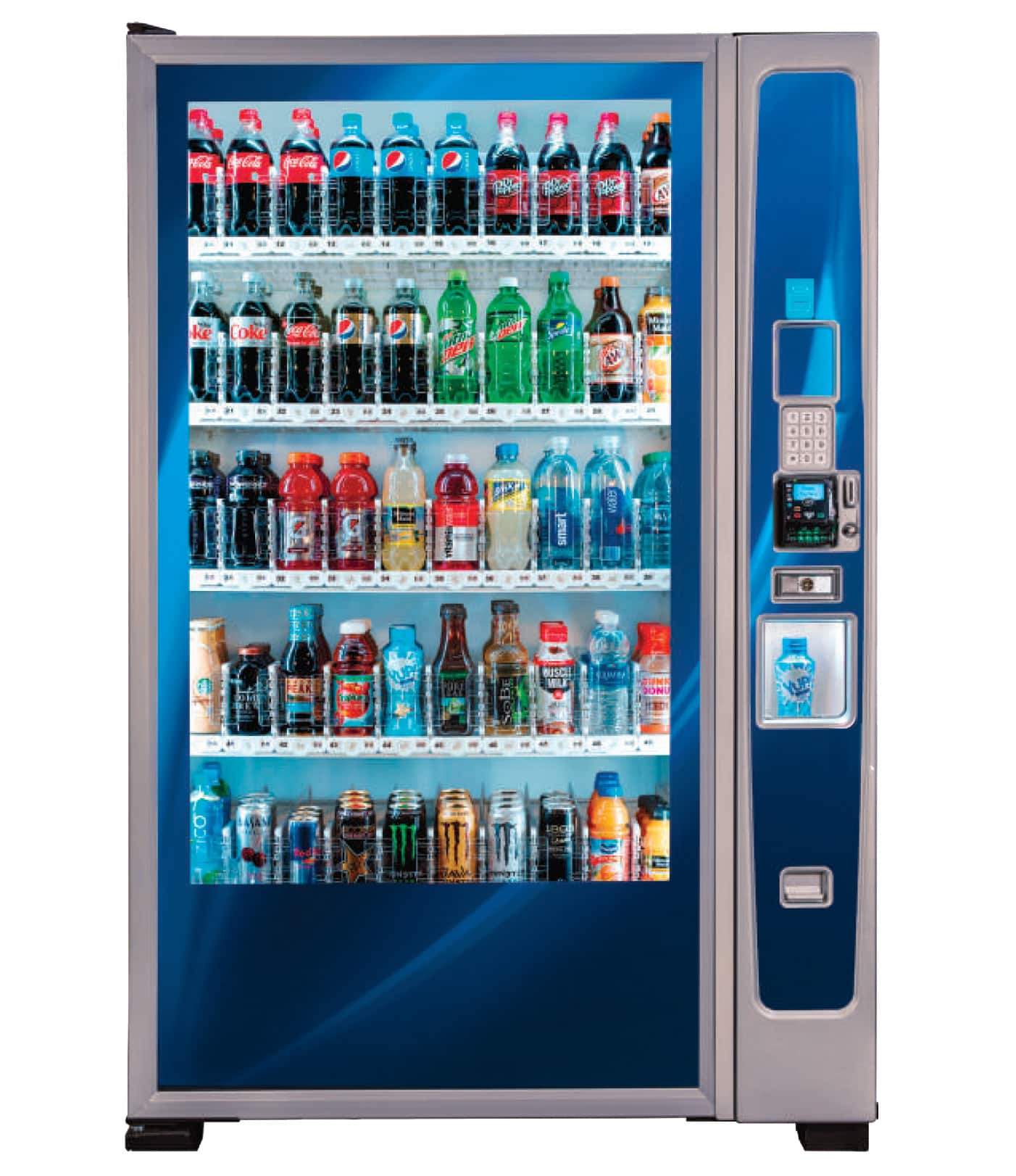
Learn how we delivered a next-generation refrigerated vending machine with advanced connectivity and serviceability—in half the time and cost of the previous in-house development.

Next-generation refrigerated vending
Services
Hardware Engineering, Firmware Development, Software Development, UI/UX Development
Project Timeline
18 months to production-ready system
Tech Stack
6 Custom PCBs, Cellular Modem Integration, Custom Product Sensors, Motor Drivers, Full-Color Display Interface
The Challenge: Breaking the Maintenance Cycle
Royal Vendors partnered with Systematic Consulting Group at a pivotal moment for the vending industry. Like many manufacturers with long-lived hardware platforms in the field, they were looking to modernize their machines to better meet evolving operator and consumer expectations—while also improving serviceability, reliability, and long-term cost of ownership.
Their existing platform had served the market for years, but routine maintenance and field service could be time-intensive, and the architecture made certain repairs more complex than ideal. Product capacity and feature sets were also increasingly constrained relative to newer, connected machines entering the market. Most importantly, operators lacked real-time visibility into machine health and inventory levels, meaning service decisions were often reactive rather than data-driven.
Across the industry, vending systems were rapidly moving toward connected, intelligent platforms capable of remote monitoring, diagnostics, and performance optimization. Royal Vendors saw an opportunity to make a meaningful leap forward—modernizing their platform in a way that would improve serviceability, expand capabilities, and remain competitive for years to come.
They engaged Systematic Consulting Group to help accelerate that transition: bringing an external engineering partner who could move quickly, control development costs, and architect a flexible, future-ready system that could evolve alongside the next generation of vending technology.

Define & Discovery
Understanding the Real Problem
We started by analyzing what made the previous generation difficult to maintain and where it fell short competitively. The key insights emerged quickly:
Critical Problems Identified:
- Monolithic electronics architecture made any failure a complex repair job
- Limited product capacity compared to modern competitors
- No remote visibility into machine health or inventory levels
- Dated 2-line character display that couldn’t support modern user experiences
- Expensive external peripherals required for basic connectivity features
Defining Product Requirements:
- Machines needed to “phone home” with health status, inventory levels, and service needs
- Operators demanded visibility into which machines needed attention before failures occurred
- Modern users expected graphical interfaces showing product details and pricing clearly
- Field serviceability was critical for maintaining uptime and controlling costs
- White-label flexibility for major customers (Coca-Cola, Pepsi, Costco, etc.)

Architect & Design
Distributed Intelligence for Service Simplicity
The fundamental architectural decision we made was distributing intelligence across multiple control boards rather than using a single controller. This ran counter to traditional vending machine design but solved the field service problem elegantly.
Distributed Electronics Architecture:
We designed 6 individual electronic boards, each controlling specific subsystems. If a motor driver failed or a payment system had issues, technicians could swap just that board in minutes rather than diagnosing and repairing complex integrated systems. This dramatically reduced both the skill level required for field service and the time machines stayed offline.
Built-in Connectivity Instead of Costly Peripherals:
Rather than requiring operators to purchase expensive external cellular modules (the industry standard at the time), we provided a modular, plug in modem utilizing a SO-DIMM socket that integrated cellular connectivity directly into the machine’s controller. This single decision:
- Eliminated hundreds of dollars in per-machine peripheral costs
- Made remote monitoring and management standard rather than optional
- Future-proofed the platform for OTA updates and advanced features
- Gave Royal Vendors a significant competitive advantage on total cost of ownership
Modern User Experience:
We replaced the dated 2×16 character display with a full-color graphical interface that could show product images, pricing, nutritional information, and vending status in real-time. This brought the user experience up to modern expectations while maintaining the ruggedness required for commercial environments.
Mechanical Integration:
Royal Vendors’ mechanical team built the delivery mechanisms, refrigeration system, and structural components. We designed all the electrical control systems including:
- Motor drivers for product delivery mechanisms
- Capacitive sensors to detect product delivery
- Temperature monitoring for refrigeration performance
- Payment system integration
- Network connectivity and cloud communication

Develop & Iterate
From 3D-Printed Prototypes to Production Scale
With 500-600 mechanical components requiring injection molding and custom fabrication, the mechanical timeline naturally extended the project. But we de-risked the electronics and software development through aggressive early prototyping.
Rapid Prototype Validation (5-6 Months):
We demonstrated working prototypes using 3D-printed mechanical components combined with production-intent electronics. This allowed us to validate:
- Motor control algorithms with real delivery mechanisms
- Weight sensor accuracy and product detection logic
- UI flow and user experience with actual users
- Cellular connectivity and cloud communication
- Inter-board communication protocols
The mechanical team did both fabrication and 3D printing. We worked hand in hand to quickly integrate and iterate. This hybrid approach let us prove the system worked months before committing to expensive injection molding tooling.
Iterative Testing and Refinement:
As injection-molded parts became available, we progressively replaced 3D-printed components, validating durability and refining the design. The distributed electronics architecture proved its value during this phase—we could isolate and fix issues in individual subsystems without cascading effects.

Deploy & Optimize
50% Cost Savings, Future-Proof Platform
The results validated both the technical approach and the decision to use contract engineering.
The entire project—from initial design through production-ready system—cost approximately 50% of what Royal Vendors spent developing the previous generation in-house. Timeline was similarly compressed, delivering a more capable product in less time.
Modern Feature Set:
- Built-in cellular connectivity eliminated costly external peripherals
- Distributed electronics enabled 15-minute board swaps vs. hours of repair
- Real-time health monitoring and inventory tracking
- Graphical display supporting modern user experiences
- Platform ready for future capabilities without hardware retrofits
Ready to Accelerate Your Next Product Generation?
If you’re evaluating whether to build internally or partner with specialists for your next product evolution, let’s talk. We excel at taking proven products and making them smarter, more connected, and more competitive—without the timeline and cost of building new capabilities in-house